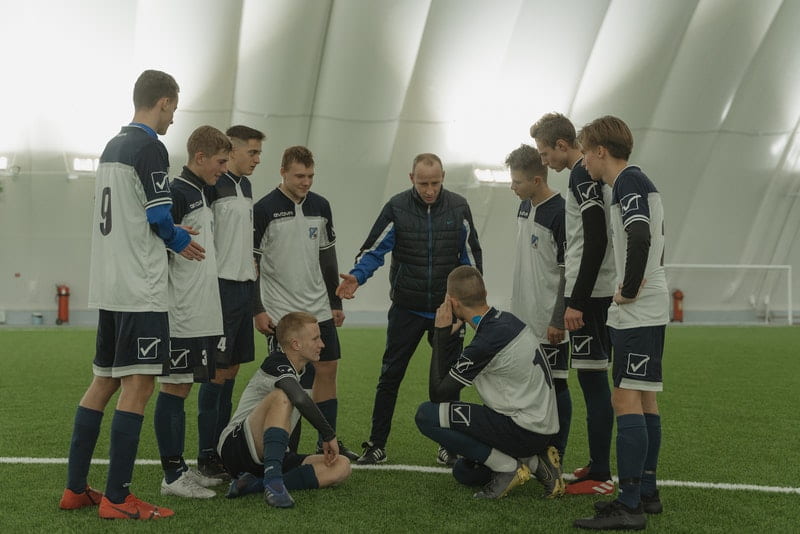
The eleven topics below first came from a discussion among basketball coaches, but every one of them applies just as well to soccer. They're the kind of questions that separate coaches who simply run practices from coaches who build teams. Use them to reflect on your own coaching, or as conversation starters with your assistant coaches.
1. Veterans Teaching Rookies Your Team's Culture
A team's culture lives in its players more than in any speech from the coach. When experienced players show newcomers how the team trains, how it treats each other and what's expected, the culture carries on from season to season. Ask your veterans to take on that role on purpose: pair them with new players in preseason, and praise them when they help.
2. Teaching Players to See Themselves Through the Coach's Eyes
Players often judge themselves only by goals and mistakes. Coaches notice much more: work rate, positioning, decisions and attitude. Explain what you look for, and give players specific feedback on those things. When a player understands how the coach sees them, they know exactly what to work on, and selection decisions make more sense.
3. Players' Parents
Parents can be a team's greatest support or its biggest distraction. Set expectations early, communicate clearly and give parents useful ways to help. A short pre-season meeting prevents many problems later. See our article on whether bad parents are driving good coaches away for more.
4. Letting Players Play Instead of Labeling Them
It's tempting to label young players early: "the fast one," "the defender," "not a goal scorer." Labels stick, and they can limit how players see themselves. Let players try different positions and roles, especially at younger ages. Many players develop in ways nobody predicted.
5. Teaching Kids to Change
Improvement means doing something differently, and that's uncomfortable. Players need to learn that changing a technique or habit will often feel worse before it feels better. Praise players for trying new things, even when the first attempts go wrong, and help them see progress over weeks rather than minutes.
6. The Value of the Ball
Every possession is precious. Teams that respect the ball make fewer careless passes, protect it under pressure and think before giving it away. Build this into practice with possession games where losing the ball has a cost, and talk about why keeping it matters.
7. Work Ethic as an Indicator
Talent is easy to spot, but work ethic often predicts long-term success better. Players who work hard in training, recover quickly after mistakes and keep improving tend to rise over time. Notice and reward effort, not just ability, and your players will learn what you value.
8. Role Development
Every player needs to know their role and why it matters, whether that's starting striker, defensive midfielder or a substitute who brings energy in the final minutes. Clear roles reduce frustration and help players contribute. Revisit roles during the season, as players grow and needs change.
9. A More Selfish Game Today?
Highlight clips celebrate individual skill and goals, and young players naturally copy what they see. That's not all bad, since creativity matters, but soccer is still a team game. Help players balance flair with decisions that help the team: the extra pass, the defensive run, the simple ball when it's the right one.
10. Beautiful Parts of the Game That Go Uncelebrated
A perfectly timed tackle, a run that drags a defender out of position, a goalkeeper's calm organization, a pass that switches play. These moments rarely make highlight reels, but they win games. Point them out in team talks and praise them in front of the group, so players learn to value them.
11. Defense: See the Ball, Move as the Ball Moves
Good team defending starts with a simple idea: every player watches the ball and shifts as it moves. When the ball goes wide, the whole team slides across. When it goes back, the line steps up. Practice this in shadow play and small-sided games until moving together becomes a habit.
Putting It Together
Many of these topics connect. A strong team culture (topic 1) makes role development (topic 8) easier, and players who see themselves through the coach's eyes (topic 2) tend to value the unglamorous parts of the game (topic 10). Work on one, and the others often improve with it.
How to Use These Topics
Pick one topic a week and think about how it shows up in your team. Talk about it with your assistants, or share a short version with your players. Over a season, these conversations can shape a team's culture as much as any drill.
Questions to Ask Yourself
- Which of these topics does my team handle well already?
- Which one would make the biggest difference if we improved it?
- What will I do differently at the next practice because of it?
- How will I know, a month from now, whether it has made a difference?
- Who on the team could help me lead the change?
For practical help on the training field, read about four habits to drop from practice and browse our soccer practice games.